
Home › Healthcare Technology Management
What Is Healthcare Technology Management?
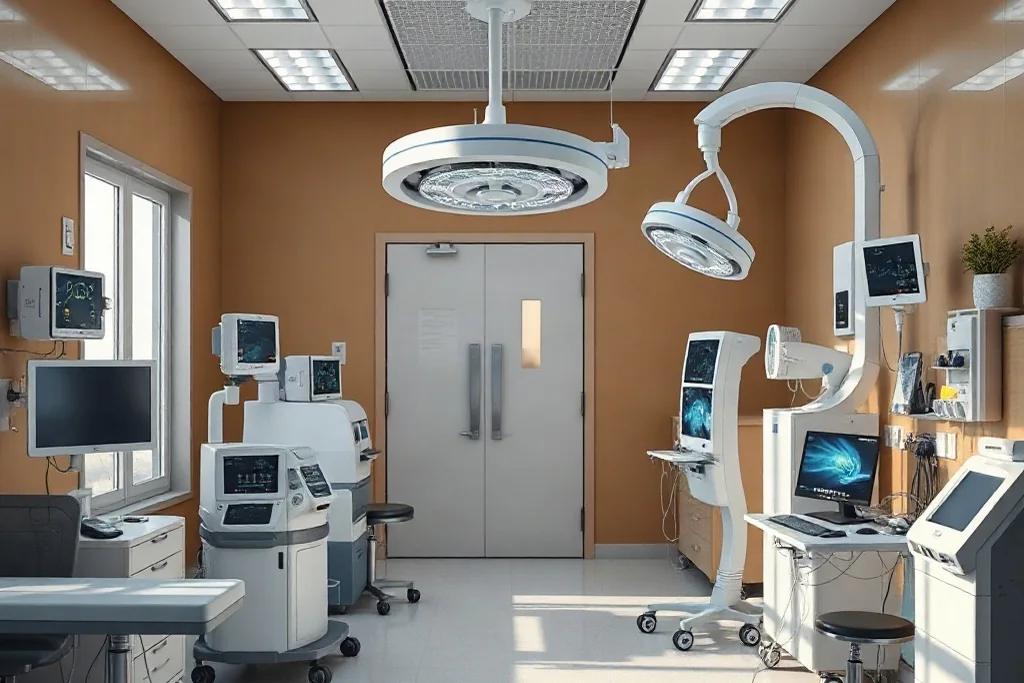
Healthcare technology management is the discipline that keeps medical equipment safe, available and traceable for every patient who depends on it. It sits where engineering, clinical practice and administration meet, and it is judged less by how clever a repair is than by whether the right device was ready, working and documented when it was needed.
The Job Behind the Equipment
Look at any ward and you see devices: monitors, pumps, ventilators, imaging systems, beds and the networks that carry their data. Somebody has to decide which of those are bought, how they are checked, who may use them, what happens when one fails and what is done with it at the end. That somebody is healthcare technology management.
The work is as much organisational as technical. A device can be perfectly engineered and still cause harm if it is used by the wrong person, in the wrong place, with the wrong accessory, or if nobody noticed that its scheduled check was overdue. Keeping those threads together is the actual job.
In practice this means the discipline is accountable for availability as much as for repair quality. A device that is perfect but unavailable has failed the patient just as surely as one that is faulty, which is why planning and spare capacity belong in the same conversation as the technical work.
The Life of a Device, Stage by Stage
A device begins with a need and a decision. Someone establishes that the clinical benefit justifies the cost, checks that it will integrate with what already exists, and plans for support, consumables and training before the order goes out.
Once it arrives, the device is commissioned, recorded, labelled and handed over with the training and instructions that make safe use possible. From then on it moves through a cycle of use, inspection, maintenance and eventually replacement or retirement, and every stage produces a record that the next stage depends on.
This is why the inventory, the schedule and the risk assessment are treated as one system rather than three separate chores. Change one and the others must follow, and a team that keeps them aligned spends far less time explaining itself later.
What a Workable Programme Contains
- A current inventory that says what you own, where it is and who is responsible for it.
- A risk-based plan that sets how often each device is inspected and serviced.
- Documented procedures for commissioning, maintenance, repair and decommissioning.
- A route for staff to report faults, near misses and unexpected behaviour quickly.
- A replacement plan that anticipates end of support rather than reacting to failure.
Why Documentation Is Not Bureaucracy
A service record looks like paperwork until the day it is needed. It is the evidence that a device was checked, that a fault was understood, that a repair was verified and that a decision to keep using something was deliberate rather than accidental.
Records also protect patients in a more direct way. When a fault pattern appears across several units, the history is what lets a team see it early, compare the affected devices and act before the next incident rather than after it.
It is worth saying plainly that records serve the patient, not the auditor. The reason to write down what was found is so that the next person has an accurate starting point, and so that a pattern has a chance of being noticed while it is still only a pattern.
Working With Clinicians, Not Against Them
Equipment is only useful if clinical staff can rely on it and understand its limits. That means agreeing what the device is for, who is allowed to operate it and what should happen if it behaves unexpectedly in the middle of care.
The most effective teams build a short route between the bedside and the workshop. A technician who hears about a near miss in the same week it happened can act on it; one who hears about it a year later can only write a report.
This is also where training belongs. A device that is understood by the people using it is safer than one that merely works, and explaining the device is part of handing it over rather than an extra task for later. Assume nothing about familiarity.
What the Discipline Covers
| Area | The question it answers | Where it shows up |
|---|---|---|
| Selection | Should we buy this device at all | The business case and the trial |
| Commissioning | Is it safe and ready to use here | Acceptance testing and labelling |
| Maintenance | Will it keep working as intended | The planned and corrective schedule |
| Retirement | Is it time to stop using it | The replacement and disposal record |
Risk as the Compass
No team can check everything with equal intensity, so effort has to follow risk. A device that could seriously harm a patient if it failed deserves a closer, more frequent look than one whose failure would be an inconvenience.
Risk is not only about the device itself. How often it is used, how many people operate it, how hard it is to notice a fault and how quickly harm could follow all change the picture, and all of them belong in the assessment.
The judgment required is real, and it cannot be reduced to a formula. Two organisations can hold the same device list and reach different conclusions about where to spend scarce attention, because their patients, staffing and history differ. That is a feature.
Where Standards Fit In
Published standards give the profession a common vocabulary for what safe management looks like, from how equipment is classified to how a maintenance programme is structured and reviewed.
Standards do not replace local judgement, and they are not a checklist to copy blindly. They describe a defensible approach, which each organisation then adapts to its own devices, patients and staffing.
Where a standard speaks to your situation directly, follow it and record that you did. Where it does not, use it as a frame for the reasoning and write that reasoning down, so that the choice is visible to anyone reviewing it later.
Healthcare technology management is ultimately about reliability: the patient does not see the inventory, the schedule or the record, but all three decide whether the device beside them is ready, and whether anyone can prove that it was.
Read next
Managing a Medical Device Inventory
Building an asset register you can actually trust, and keeping it accurate as equipment moves.
Building a Preventive Maintenance Schedule
Deciding what to service, how often and how to prove that the work was done.
Deciding When to Replace Medical Equipment
Signals that repair is no longer the better answer, and how to plan replacement before failure forces it.