
Infusion Pumps and Safety by Design
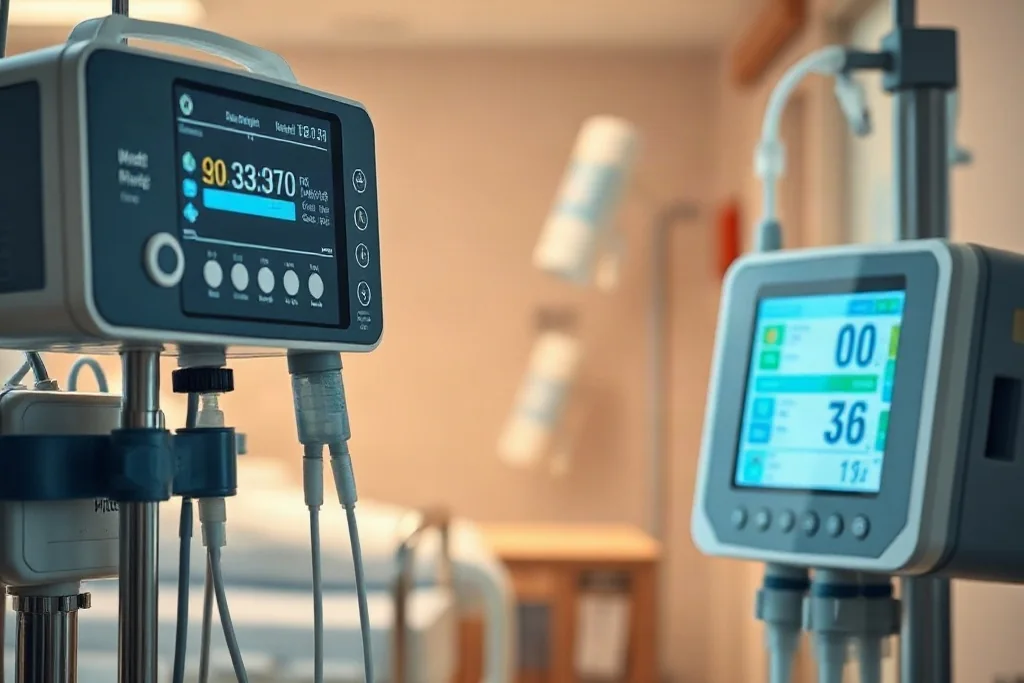
Infusion pumps deliver drugs, fluids and nutrition directly into a patient at a controlled rate, which is exactly why they attract so much safety attention. The device is common, the task is repetitive and the consequences of a programming error can be severe, so safety has to be built into the layers around the pump rather than left to careful operation alone.
Why Infusion Deserves Special Attention
Infusion is one of the most frequently performed clinical interventions, and it is carried out by a wide range of staff across many settings. That volume alone makes it a natural focus for safety work.
The device sits at the end of a chain that includes prescribing, preparing, programming and monitoring. A pump can only do so much about an error that began three steps earlier, which is why the whole chain is usually considered together.
The drug library also standardises practice between units that previously handled the same drug differently. That consistency is a safety benefit in itself, because staff who move between areas meet the same expectations rather than relearning the device each time.
The Layer of Drug Libraries
A drug library is a set of preconfigured limits held inside the pump, tailored to the patient group where the device is used. It offers the operator suggested concentrations and doses, and it warns when a programmed value falls outside an agreed range.
The library is only as good as the work behind it. Its limits have to be agreed by the clinical teams who will live with them, reviewed as practice changes and kept consistent across otherwise identical devices.
It is useful to distinguish errors that the pump can catch from those it cannot. Setting limits to catch every conceivable mistake would make the device unusable, so the limits target the errors that are both plausible and serious.
Layers That Reduce Infusion Risk
- A drug library with limits agreed by the clinical teams who use it.
- A visible confirmation of the programmed value before the infusion starts.
- Free-flow protection and clear identification of the tube set.
- An independent check at the highest-risk programming steps.
- Clinical observation of the patient and the infusion site during the infusion.
Programming Errors and How They Happen
Many programming errors are not careless slips but predictable results of a task done often, quickly and under interruption. A misplaced decimal, a wrong unit or a value entered in the wrong field are all classic patterns.
Since the pattern is predictable, the defence can be designed. Confirmation steps, clear presentation of the programmed value and a visible summary before starting give the operator a chance to catch the mistake while it is still reversible.
Training should be revisited whenever the library or the pump software changes, not only when a device is new. Most of the staff using a pump will meet it long after the initial rollout, and their knowledge is built from the version currently in the corridor.
The Physical and Human Layers
Beyond software, the tube set, the loading procedure and the labelling of the infusion all contribute. Free-flow protection, occlusions alarms and clear tubing identification are part of the same safety story as the programming logic.
People are the last layer and the most flexible one. Two-person checks at high-risk steps, independent verification of the calculation and a clear rule about what must be confirmed before starting all reduce the chance that a single slip reaches the patient.
Standardising the consumables that go with a pump reduces a whole category of confusion. When several similar tube sets serve different devices, the risk of a mismatched combination goes up sharply, and the mismatch is easy to miss until something behaves unexpectedly.
Where Errors Start and What Helps
| Stage in the chain | Typical failure | Useful defence |
|---|---|---|
| Prescribing | Wrong dose or unit | Standard concentrations |
| Preparing | Wrong dilution | Independent double check |
| Programming | Misplaced value | Limits and confirmation |
| Monitoring | Delay in noticing | Alarms plus clinical watch |
Monitoring and Detecting Problems Early
Once an infusion is running, the pump's job is to notice when reality diverges from the plan. Occlusion, a nearly empty container and an unexpected pressure change are the device reporting on its own task.
Clinical monitoring complements this. Observing the patient and the site, and checking that what is being delivered matches what was intended, catches the problems that a device cannot sense about the patient themselves.
Handover is a vulnerable moment for a running infusion. Making sure that the pump's programme, the prescription and the patient's condition are all confirmed in the handover closes a gap where a mismatch can otherwise pass between two people unnoticed.
Improving Safety Over Time
Pump safety improves when the incidents and near misses around infusion are collected and examined together. Patterns emerge across units that no single department could see on its own.
That evidence then feeds back into the drug library, the training and the local checking rules. The point of collecting it is to make the next change evidence-based rather than a response to the most recent dramatic event.
All of these layers depend on someone owning them. Clear responsibility for the library, the training and the checking rules keeps the arrangement coherent as staff, drugs and devices change over the years.
Infusion safety is the product of several layers acting together: a well-built pump, an agreed drug library, a checking habit and attentive monitoring. No single layer carries the whole weight, and together they make a severe programming error far less likely to reach a patient.
Read next
Human Factors in Medical Device Design
Why good devices fit the way people really work, and how use errors are designed out rather than blamed on users.
Alarm Fatigue and Patient Safety
How too many alerts become background noise, and the practical ways teams reduce the load without hiding real warnings.
Reporting Device-Related Incidents
What counts as a reportable event, how to describe it usefully and what happens to the information afterwards.