
Incident Response for Connected Devices
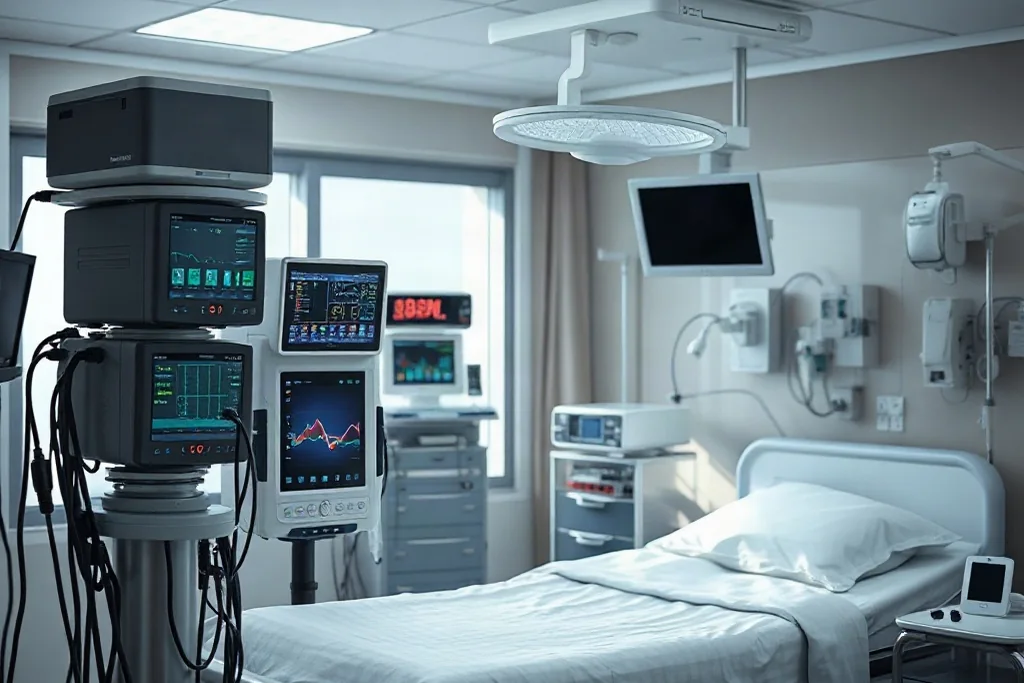
A security incident involving equipment in clinical use is unlike an ordinary IT incident, because switching the affected system off is not always possible and may itself harm a patient. The response has to hold clinical safety and security together from the very first minutes.
The First Hours
The opening phase is about understanding: what is affected, whether patients are at risk, and whether the problem is still spreading. Getting those answers quickly matters far more than identifying the cause, which comes later.
It also helps to decide immediately who is in charge of the response, and to make sure that clinical leadership is part of that decision. Security incidents that affect patient care are not purely technical events.
A contact list that is current is a surprisingly large part of readiness. Knowing who to call at any hour, for the device, the network and the clinical decision, removes a delay that otherwise consumes the most important minutes of the response.
Protecting Patients First
Where a device is delivering therapy or monitoring a patient, clinical judgement determines what happens next. The safest technical action may be to isolate a device, and the safest clinical action may be to keep it running, and somebody with the right authority has to weigh the two.
Having a fallback ready in advance makes that moment much less fraught. Knowing how care will be delivered without a particular system, and who can make that call, is what prevents a difficult decision being invented under pressure.
Deciding in advance who may speak publicly about the incident prevents both silence and improvisation. A single clear point of communication is easier to trust than several accounts given independently and slightly differently.
What to Establish in the First Minutes
- Which devices and systems are actually affected.
- Whether any patient is at immediate risk and what care depends on them.
- Who is leading the response, with clinical representation included.
- How the affected devices can be separated from the wider network.
- What fallback already exists if a system must be taken out of use.
Containing Without Disabling Care
Containment is usually achieved by separating affected devices from the rest of the network rather than by shutting them down. Restricting access and blocking the routes an intrusion would use can limit the damage while clinical work continues.
Judgement is needed about where to draw the line. Isolating too little lets the problem spread; isolating too much can take down services that clinicians depend on. That balance is best struck with both technical and clinical people in the room.
Practising the response occasionally, even in a limited way, exposes the gaps that only appear when people try to act. A short exercise involving both clinical and technical staff is worth more than a long document that nobody has ever used.
Evidence and Communication
Records made during the incident are what make the later analysis possible. Noting what was observed, when, what was changed and by whom turns a confused sequence of events into something that can be examined and learned from.
Communication needs the same care. Clear, honest updates to the people affected, including clinical teams and, where appropriate, patients, prevent rumour from filling the gaps and keep the response coordinated.
Some incidents turn out to be technical faults rather than attacks. The early response is similar either way, and the judgement about which it is can safely wait until patients are protected and the situation is contained.
Decisions Under Pressure
| Priority | Question to settle | Who decides |
|---|---|---|
| Safety | Is a patient at risk now | Clinical lead |
| Containment | How far has it spread | Security lead |
| Continuity | What care depends on this | Clinical and technical together |
| Recovery | When and how to restore | Technical lead, clinically agreed |
Recovering Safely
Recovery is not simply restoring the previous state. The affected devices have to be examined, cleaned or rebuilt in a controlled way, and their return to clinical service should be deliberate and recorded rather than improvised.
It is worth asking during recovery whether the arrangement should change. A successful restore of the exact configuration that made the incident possible returns the organisation to where it started.
Records should include the reasoning behind decisions as well as the actions taken. Later reviewers will want to know not only what was done, but why it seemed like the right choice with the information available at the time.
Learning From the Event
Afterwards, the response itself should be reviewed as honestly as the incident. What was noticed quickly, what was missed, which decisions were difficult and what would have made them easier are all questions worth asking.
The findings should change something concrete: a control, a monitoring rule, a contact list or a fallback plan. A review that produces a document and no change is the most expensive possible outcome, because it costs the lesson without buying the protection.
Afterwards, the changes should be checked rather than assumed. Confirming that a new control is actually in place and working is the difference between an organisation that has learned something and one that has merely written it down.
Responding to a connected-device incident is a joint clinical and technical effort. Understand quickly, protect patients first, contain without disabling care, record everything and change something concrete once the incident is over.
Read next
Securing Connected Medical Devices
The baseline controls that protect networked equipment without getting in the way of clinical work.
Network Segmentation for Medical IT
Why flat networks are risky, and how to separate medical devices sensibly and safely.
Vulnerability Management in Hospitals
Turning vulnerability information into a plan a clinical engineering team can actually carry out.