
Home › Medical Device Industry
From Prototype to Market
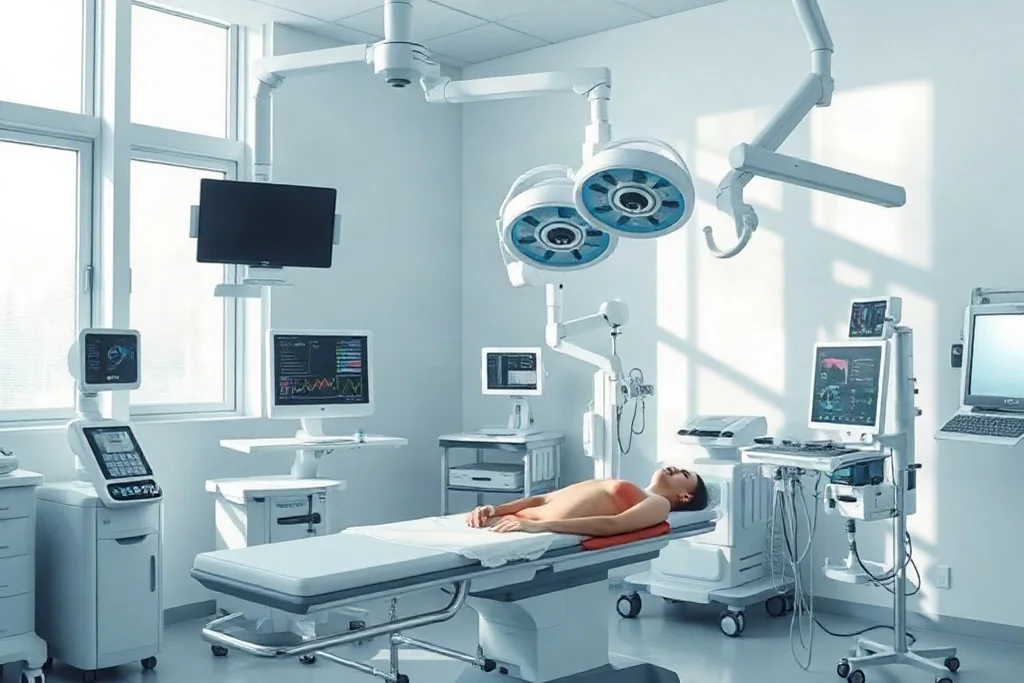
The distance between a working prototype and a device that can be sold, supported and safely used for years is far greater than most people expect. Bridging it is less about inventing anything new than about proving, documenting and supporting what has already been shown to work.
What the Prototype Proves
A prototype demonstrates that an idea can function. It usually does so in favourable conditions, with knowledgeable hands and without the constraints that will apply once the device enters routine use.
That is a genuine achievement and a limited one. The prototype answers the question of whether the approach works at all, and it leaves almost every question about repeatability, usability and support still open.
Regulatory strategy is worth thinking about early rather than at the end. The route a device takes to market affects what evidence is needed, how long the process takes and what the organisation must be able to demonstrate along the way.
Designing for Manufacture
A device that must be produced in quantity has to be designed for that reality. Components must be obtainable, tolerances achievable and assembly repeatable, and the choices that make a prototype work may be exactly the ones that cannot scale.
This stage often changes the product significantly. A component that suited a single unit may be replaced by one that suits production, and each such change reopens questions about performance and safety that were previously settled.
A design change made after launch is far more expensive than the same change made during development, because it carries documentation, revalidation and communication costs. That asymmetry is the main argument for spending longer on verification before release rather than fast afterwards.
What Must Be Settled Before Launch
- Whether the design can be manufactured consistently and at scale.
- Whether the evidence of safety and performance is complete and documented.
- Whether the device is usable in the conditions where it will actually be used.
- Whether spares, service information and software support will exist.
- Whether the arrangements for watching field performance are in place.
Evidence and Verification
Before a device can be placed on the market it has to be shown to perform as intended and to be safe for its purpose. That evidence is produced through verification against the requirements and, where appropriate, clinical investigation.
The evidence also has to be documented in a form that survives scrutiny. A result that cannot be traced to a method, a version and a record is far weaker than the same result properly captured.
Risk management runs through development rather than sitting beside it. Decisions about components, interfaces and instructions all change the risk picture, and an assessment updated continuously is far more useful than one produced at the end to satisfy a process.
Usability and Instructions
A device is not finished when it functions. How it will be used, by whom and in what conditions all shape the final design, and the instructions that accompany it are part of the safety case rather than a later addition.
Getting usability wrong at this stage is expensive. Changes after launch are far more costly than changes before it, and the problems found in real use tend to be the ones that could have been surfaced by testing with genuine users.
It helps to involve the people who will use the device before the design is frozen. Conversations with clinicians and technical staff at that stage frequently reveal constraints that no internal review would surface, and they are cheap to accommodate.
Prototype Against Marketed Device
| Aspect | Prototype | Marketed device |
|---|---|---|
| Performance | Demonstrated once | Reproducible in every unit |
| Manufacture | Hand-built | Produced to defined tolerances |
| Evidence | Informal results | Documented and traceable |
| Support | Not considered | Planned for years of service |
Support, Service and Spares
A device sold into healthcare enters a relationship that lasts for years. Spare parts, service information, software updates and a route to technical help all have to exist for that relationship to work.
Planning for support early avoids a difficult position later. An organisation that discovers after launch that a component is no longer available, or that no service information exists, has created a problem for every customer it has.
Manufacturing partners deserve early attention too. Production capability, quality systems and change control at the manufacturing site all affect whether the design that was verified is the design that is actually produced.
Staying on the Market
Placing a device on the market begins an obligation rather than ending one. Performance in the field has to be watched, problems have to be assessed and customers have to be told what matters.
Manufacturers who treat this as genuine engagement gain two things: earlier warning of problems and better information for the next version. Those who treat it as administration generally learn about issues later and at greater cost.
Finally, the launch plan should include what happens to the first customers. A small, supported introduction produces far better information than a large, thinly supported one, and it keeps early problems manageable.
Getting a device to market is a discipline of proving and supporting as much as inventing. Design for manufacture, build the evidence, test with real users and plan the support before the first unit is sold.
Read next
Post-Market Surveillance Explained
How real-world use feeds back into design, labelling and safety communication.
Interoperability in Healthcare Technology
Why devices and systems must exchange information reliably, and what breaks when they cannot.
The Healthcare Technology Workforce
Why skilled device and sterile-processing staff are in short supply, and what makes people stay.