
Home › Medical Device Industry
Post-Market Surveillance Explained
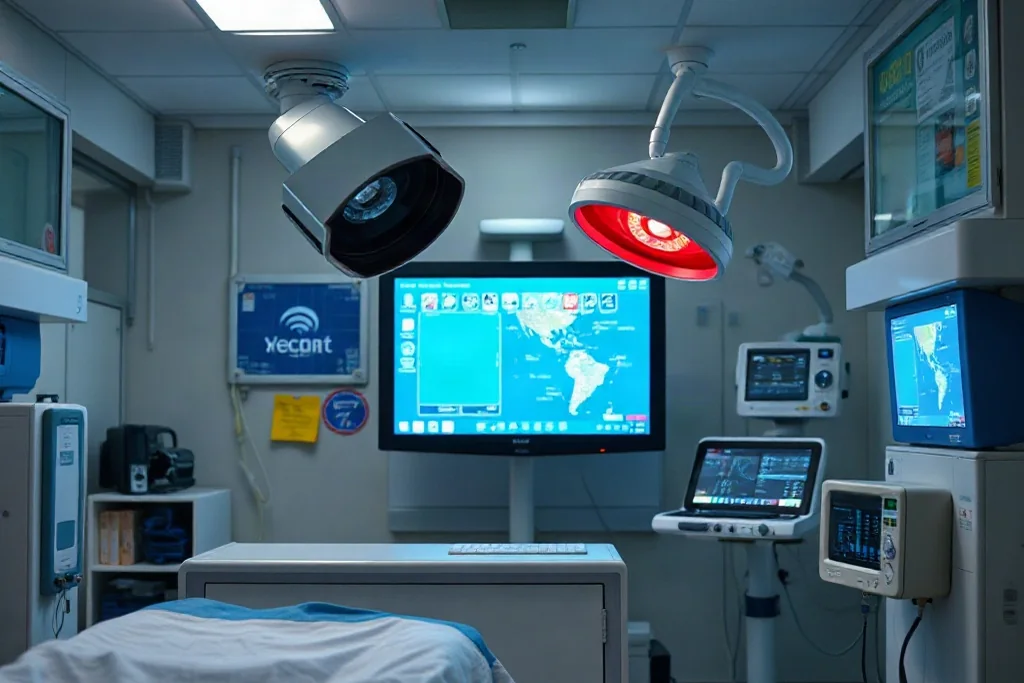
Once a device is in use, the questions change. The design has been verified, the evidence submitted and the device placed on the market, and what matters now is how it behaves in the hands of thousands of users that no laboratory could fully represent.
What Post-Market Surveillance Is
Post-market surveillance is the systematic collection and review of information about a device once it is in use. It covers complaints, incidents, returned units, service data and published literature relevant to the device.
Its purpose is to detect what pre-market testing could not. Real use introduces users, environments, combinations and patterns of behaviour that no controlled study captures completely, and the field is where those differences appear.
Complaint intake is worth designing rather than merely receiving. If users cannot report a problem easily, the organisation loses precisely the information it needs, and it will generally hear about the most serious events only, which is the least useful distribution.
Why the Field Differs From the Laboratory
A laboratory test uses defined conditions, trained operators and a controlled sequence. Clinical work involves interruptions, time pressure, unusual patient presentations and equipment shared between teams and departments.
Those conditions produce a different distribution of problems. Some devices work exactly as expected everywhere, while others reveal a weakness only when used by a particular group, in a particular setting, in a particular way.
Returned devices are a valuable and underused source. Examining what actually failed can reveal the mechanism behind a problem, where the complaint record alone often describes only the symptom that the user noticed.
What Surveillance Should Cover
- Complaints, incident reports and near misses involving the device.
- Service and repair records, including parts that fail repeatedly.
- Feedback from users about usability and awkward moments in practice.
- Relevant published literature and safety notices for the device type.
- Any pattern involving a particular version or way of using it.
Sources of Information
Complaints and incident reports are the most direct source, though they tend to describe serious events better than small annoyances. Service records add a different view, showing the pattern of repairs and the parts that fail first.
Published literature, safety notices and field service feedback together fill in the picture. The skill lies in combining sources rather than relying on any one of them, because each has a blind spot the others do not share.
Volume is not significance. A large number of trivial complaints and a single severe report require different responses, and a process that ranks only by count will systematically deprioritise the events that matter most.
Analysing What Comes Back
Raw data accumulates quickly, and the analysis is what turns it into a signal. Grouping information by device version, by user group and by circumstance often reveals a pattern that the overall numbers conceal.
The judgment required is about significance. A single serious event and a thousand minor ones are different kinds of problem, and deciding which deserves a design change, a labelling change or no change at all is a considered decision.
It helps to look at the pattern of problems across versions. A fault that appears only after a design change, or that disappeared when a component was replaced, tells a clearer story than the raw totals and points directly at what should be done
From Signal to Response
| Finding | Likely response | Who needs to know |
|---|---|---|
| Isolated serious event | Investigate, then assess | Manufacturer and regulator as required |
| Repeated minor problem | Design or labelling change | Users and service network |
| Usability confusion | Revised instruction or training | Users and trainers |
| No adverse pattern | Continue monitoring | Internal quality records |
Acting on the Findings
Findings can lead to several responses: a design change, a revised instruction, a training recommendation or a communication to users. The response should match the nature of the problem rather than the convenience of the manufacturer.
Prompt, clear communication matters most when the risk is significant. Users need to know what has been found and what they should do, in terms they can act on quickly in a clinical setting.
Communication with users should be practical. Telling clinicians that a problem exists, what it looks like in practice and what to do about it reaches them better than a technical notice that describes the fault in engineering terms.
Feeding Back Into Design
The strongest organisations treat field information as product development input. Problems found in use are the most valuable design information available, because they describe conditions that the original specification did not anticipate.
Closing that loop benefits everyone. A manufacturer that learns from the field produces a better next version, a more defensible product and fewer problems to manage later, which is a commercial argument as much as a safety one.
The closing step is to check that a change actually worked. Measuring whether a fault became less frequent after a modification confirms the response was correct, rather than assuming that because something was done, the problem is over.
Post-market surveillance is how a device keeps being safe rather than merely having been declared safe. Collect information from several sources, analyse it for real patterns, respond in proportion and feed what you learn back into the next design.
Read next
From Prototype to Market
The work between a working model and a device that can be sold and supported responsibly.
Interoperability in Healthcare Technology
Why devices and systems must exchange information reliably, and what breaks when they cannot.
The Healthcare Technology Workforce
Why skilled device and sterile-processing staff are in short supply, and what makes people stay.