
Monitoring Sterilization Quality
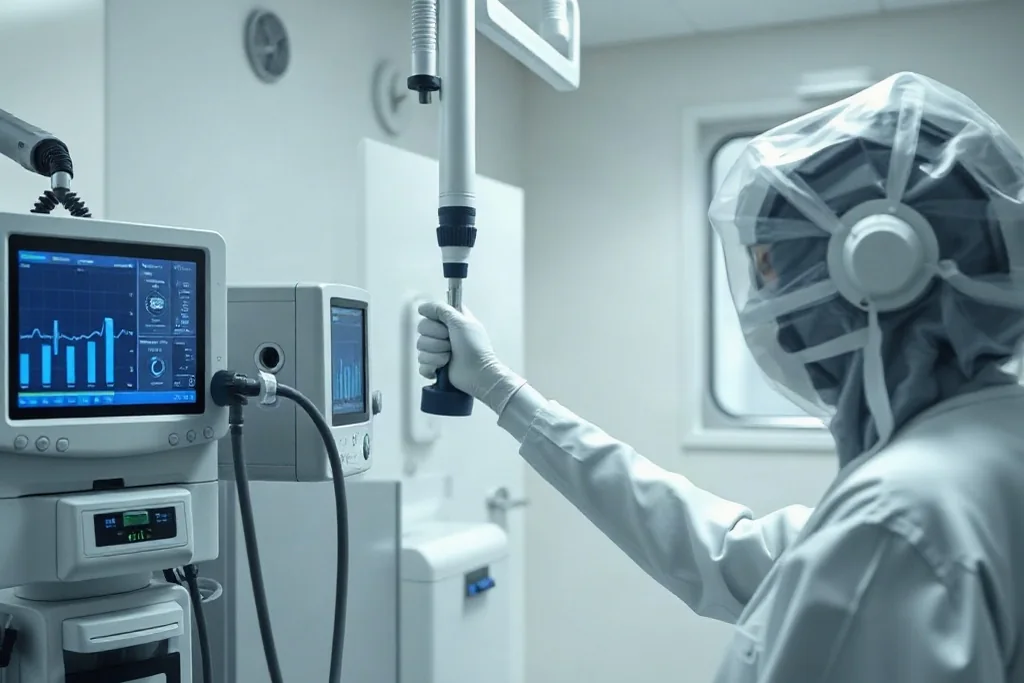
Sterilization is invisible when it works. Monitoring is the set of checks that turns that invisible process into something you can give an account of, and understanding what each check can and cannot tell you is what makes the monitoring programme meaningful rather than ceremonial.
Why Monitoring Is Necessary
A completed cycle looks the same whether or not it sterilized the load. There is no visible difference between an instrument that was properly processed and one that was exposed to steam that never reached it, so the process has to be verified indirectly.
Monitoring provides that verification. It also provides the record that allows a tray to be defended later, and it is the only way to detect a failure that did not announce itself at the time.
Placement of indicators deserves deliberate thought. An indicator positioned where it will not experience the conditions of the load proves nothing, while one placed in the most difficult position gives a much more informative result for the same effort.
Mechanical Monitoring
Mechanical monitoring records what the equipment did: the temperature, pressure, time and other parameters of the cycle. It is the first and most immediate check, and an out-of-range reading is an immediate signal to stop.
Its limitation is that it describes conditions in the chamber rather than at the load. A cycle can record perfect parameters while part of the load never reached them, which is why mechanical records are necessary but not sufficient.
The schedule for biological testing should be defined by the process and by local requirements rather than chosen for convenience. The point of the schedule is coverage, and a sparse one detects failures only after a pattern has already formed.
What a Monitoring Programme Covers
- Mechanical records of the parameters for every cycle.
- Chemical indicators placed so that they demonstrate exposure.
- Biological indicators used according to the defined schedule.
- Records that link each load to its monitoring results.
- Pre-agreed actions for every kind of failure that can occur.
Chemical Indicators
Chemical indicators change appearance in response to the conditions they are exposed to. Placed on the outside or inside of a pack, they show that the item was exposed to the process rather than merely placed in the chamber.
They are useful for detecting gross errors, such as a pack that was never exposed at all, and for distinguishing one processed pack from another. They are not evidence that sterilization occurred, and treating them as such overstates what they do.
Records are most useful when they are reviewed rather than merely filed. Looking at the results together over time reveals a slow drift in parameters or a rising rate of marginal indicators that no single cycle would ever reveal.
Biological Indicators
Biological indicators contain a known population of resistant organisms and provide the strongest evidence available that the process actually killed microorganisms. They are the closest thing to a direct test of the outcome.
A positive result means that conditions were not achieved somewhere in the load, and it triggers an investigation and a recall of the affected items. Their use is usually defined by the process, the load and local requirements.
Failures should be investigated at the level of the process. Asking why the conditions were not achieved, rather than who was responsible, leads to changes that reduce the chance of a repeat instead of changes that merely record blame.
Reading the Results
| Result | What it means | Immediate action |
|---|---|---|
| Parameter out of range | The cycle was not valid | Do not use the load |
| Indicator unchanged | The item may not be processed | Reprocess and investigate |
| Biological positive | Organisms survived | Recall and investigate |
| All consistent, in range | The cycle was valid | Release and record |
Record Keeping and Traceability
Records connect every cycle to the load it processed and to the monitoring results that accompanied it. That connection is what makes a recall possible and what allows a question about a specific tray to be answered accurately.
Traceability runs from the instrument through the process to the patient. Where the chain is broken, a suspected problem cannot be resolved with confidence, and the organisation is left with uncertainty precisely where it needs certainty.
Users of the processed items are part of the monitoring chain in practice. If a tray appears damaged, incomplete or incorrectly assembled, that observation should reach the processing department promptly, because it may indicate a problem affecting many others.
Acting on the Results
Monitoring is only worthwhile if the results change what happens next. An out-of-range parameter, a failed indicator or a positive biological test should each lead to a defined action rather than to a note in a file.
The responses should be decided in advance, including who investigates, who is informed and how affected items are handled. Improvising a response during a failure is how a manageable incident becomes a difficult one.
Reviewing the monitoring programme itself, from time to time, keeps it honest. Processes change, equipment is replaced and requirements move, and a programme designed for an earlier arrangement may no longer provide the coverage its records imply.
Monitoring makes a hidden process accountable. Combine the mechanical record, chemical indicators and biological testing, keep them linked to the loads they describe, and decide in advance exactly what happens when one of them fails.
Read next
Sterile Processing: The Basics
The full journey a reuseable instrument takes, and why each stage matters to the next one.
Steam Sterilization Explained
The conditions steam needs to work, and the everyday reasons a cycle fails to reach them.
Reprocessing Reuseable Devices
Manufacturer instructions, validation and the limits of what can safely be reused.