
Steam Sterilization Explained
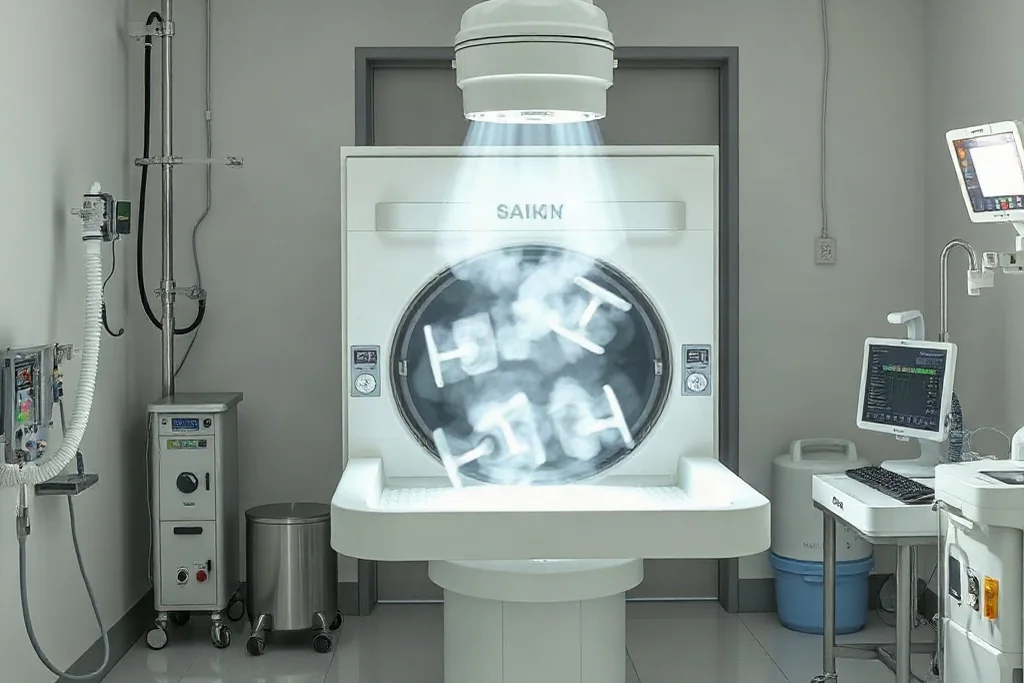
Steam sterilization is the most widely used method in healthcare, and also the one most often taken for granted. It works reliably when the conditions inside the chamber are right, and it fails quietly when they are not, which is why understanding those conditions matters more than knowing the name of the cycle.
Why Steam Works
Moist heat kills microorganisms by denaturing their proteins, and it does so far more effectively than dry heat at the same temperature. The presence of moisture is what makes the process efficient.
That means the steam has to reach the load as steam, not as air, and it has to condense on the surfaces it is meant to sterilize. Where air remains trapped, the temperature at that point may be wrong even though the chamber reading looks correct.
Cycle types exist because different loads behave differently. A wrapped instrument set, a porous load and a hollow instrument each present their own challenge for air removal, and the cycle chosen should suit what is being processed.
Air Removal Is the Core Problem
Most failures in steam sterilization trace back to air. Air is heavier than steam and can be trapped in the load, in instrument lumens or in the chamber itself, and where it sits, the steam cannot follow.
Different cycle types address this in different ways, but all of them are fundamentally techniques for removing air reliably. When air removal is incomplete, the cycle appears to succeed while parts of the load were never properly exposed.
Saturated steam is the operative phrase. Steam carrying entrained moisture or air behaves differently from dry saturated steam, and the quality of the steam supplied to the chamber is therefore part of the process specification rather than a background utility detail.
Common Reasons a Steam Cycle Fails
- Trapped air that the cycle was unable to remove completely.
- Trays or containers loaded too densely for steam to penetrate.
- Packaging that resists the steam or is wrong for the method.
- A chamber fault, a leak or overdue maintenance on the equipment.
- Parameters set outside the validated range for the load.
The Parameters and What They Mean
The process is defined by a combination of temperature, pressure and time. The pressure matters because it is what allows the chamber to reach the required temperature with saturated steam present.
Time and temperature are linked rather than independent. Within the validated range, the relationship between them is fixed by the process, and changing one without understanding the other risks leaving the load outside the validated conditions.
Chamber loading should follow the equipment instructions rather than an instinct for fullness. Filling a chamber beyond its effective capacity is one of the most common practical causes of a cycle that reports success on paper but fails in the load.
Loading and Packaging
How a chamber is loaded affects how well steam penetrates. Trays packed too densely, containers with their own restrictions, and items placed in a way that traps air all reduce the likelihood of a successful cycle.
Packaging has to allow steam in and keep contamination out afterwards. A material that resists steam penetration defeats the cycle, while one that is too porous allows contamination in during storage, and both failures are easy to overlook.
Maintenance of the sterilizer belongs in the same conversation. Door seals, valves, air removal systems and instruments all degrade, and a chamber that passed validation a year ago may no longer be delivering the conditions its records suggest it is.
What Each Monitor Tells You
| Monitor | What it shows | What it cannot show |
|---|---|---|
| Mechanical record | What the chamber did | Whether the load was reached |
| Chemical indicator | Exposure to conditions | That sterilization occurred |
| Biological indicator | Whether organisms were killed | Which item failed and why |
| Record review | Whether the cycle is valid | The cause of a hidden failure |
Monitoring the Cycle
Monitoring is what turns an assumption into evidence. Mechanical records of the parameters, chemical indicators on the load and biological indicators that test the process against living organisms each answer a different question.
The mechanical record shows what the chamber did and is the first check. Chemical indicators show that the load was exposed to the conditions, and biological indicators provide the strongest evidence that the process actually sterilized.
It is worth understanding what the parameters actually control, rather than treating them as settings to be copied. That understanding is what allows a sensible decision when a load is unusual, and it is what turns an alarm into a diagnosis rather than a mystery.
When a Cycle Fails
A failed cycle is information rather than merely an inconvenience. The load is not used, and the reason for the failure is investigated before the process returns to normal, because a repeat failure usually indicates something systematic.
Recurring failures often point to the load configuration, the equipment or maintenance rather than to chance. Looking at the pattern rather than the individual cycle is what prevents the same failure from being rediscovered later.
Where several cycles are used in one department, keeping the validated parameters clearly documented for each prevents a slow drift in which settings are adjusted for convenience until nobody is certain what the process actually specifies.
Steam sterilization succeeds when air is removed, the parameters are correct, the load allows penetration and the cycle is properly monitored. Knowing why it works is what makes it possible to recognise an honest failure and to act on it.
Read next
Sterile Processing: The Basics
The full journey a reuseable instrument takes, and why each stage matters to the next one.
Reprocessing Reuseable Devices
Manufacturer instructions, validation and the limits of what can safely be reused.
Monitoring Sterilization Quality
Chemical, biological and mechanical checks, and what each one can and cannot tell you.