
Sterile Processing: The Basics
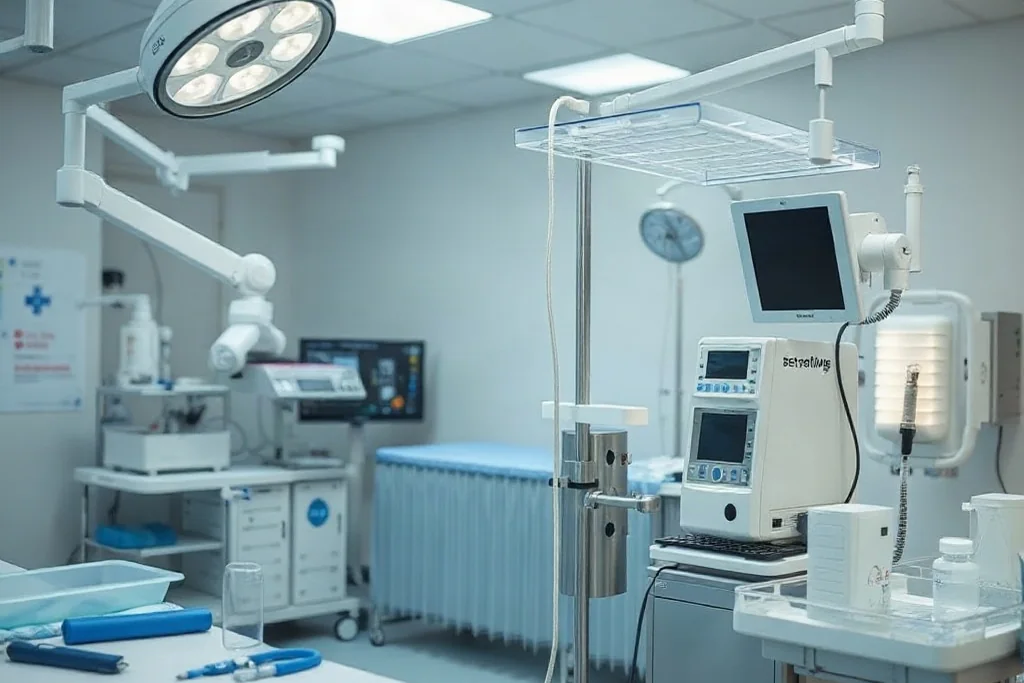
Sterile processing is the department that stands between a used instrument and a safe one. Its work happens away from the patient, which is exactly why it has to be systematic: nobody at the bedside can see whether the process was carried out properly, so the process has to be capable of standing on its own.
Why the Whole Chain Matters
An instrument that is not properly cleaned cannot be reliably sterilized. Soil, bioburden and dried residue can shelter microorganisms and prevent the sterilizing agent from reaching the surfaces it must reach, so cleaning is not a preliminary step but a precondition.
That dependency runs the length of the process. Each stage relies on the one before it having been done properly, and a shortcut early in the chain cannot be recovered by extra effort at the end.
Water quality is an underrated part of the process. Poor water can leave deposits on instruments, interfere with detergents and, over time, damage the surfaces that the process depends on, so the supply itself deserves to be specified and monitored.
Point of Use and Transport
Processing begins at the point of use, where instruments are kept moist and contained so that residue does not dry and harden on the surfaces. How they are handled in those first minutes affects everything that follows.
Transport is part of the process too. Instruments travelling in a way that risks damage, or waiting long enough for contamination to dry, create work downstream that no amount of care in the decontamination room can fully undo.
The design of the department supports the process. A layout that separates dirty and clean workflows, that has enough space for the trays in use and that allows staff to work without rushing is a practical safety measure as much as a building specification.
Stages That Decide the Outcome
- Point of use: keeping instruments moist and contained before transport.
- Cleaning: removing physical contamination by a validated method.
- Disinfection: reducing the microorganisms present on the instruments.
- Inspection: checking cleanliness, damage and function before assembly.
- Sterilization and storage: using the right parameters and protecting the result.
Cleaning and Disinfection
Cleaning removes the physical contamination, and disinfection reduces the microorganisms present. Both steps are carried out according to validated methods suited to the instruments and the equipment available.
Validation is what makes the method trustworthy. A process that has been demonstrated to work consistently, with defined parameters, gives a far stronger guarantee than one that relies on the diligence of whoever happens to be on shift.
Staff competence is the thread running through every stage. The work requires judgement about cleanliness, damage and function, and that judgement is built through training and experience rather than picked up informally on the job.
Inspection and Assembly
After cleaning, instruments are inspected for cleanliness, damage and function. This is the point where a cracked insulation, a stiff hinge or a retained fragment is most likely to be found, and it is a skilled judgement rather than a glance.
Assembly then arranges the instruments into sets according to the requirements for their intended use, and the tray is prepared for sterilization in a way that allows the agent to reach every surface.
It helps to think about the process backwards. Starting from what the patient needs at the point of use and working back through storage, sterilization, inspection and cleaning makes it obvious which shortcuts would break the chain and where the priorities lie.
The Chain From Patient to Patient
| Stage | What it achieves | If it is rushed |
|---|---|---|
| Point of use | Prevents soil drying on | Harder cleaning later |
| Cleaning | Removes contamination | Sterilization is unreliable |
| Inspection | Finds damage and residue | Faults reach the patient |
| Storage | Keeps the result intact | Sterility is compromised |
Sterilization and its Limits
Sterilization destroys or removes all forms of microbial life, and the methods available differ in what they suit. Whatever method is used, it operates within defined parameters, and staying inside them is what makes the cycle effective.
No method is a substitute for cleaning. Residual soil can protect organisms from the process, and the same residue can also damage the instruments over repeated cycles, which is why the earlier stages carry so much of the total weight.
Documentation should describe what was actually done rather than what was expected. A record completed in advance, or reconstructed afterwards, undermines the traceability that is the whole point of keeping records in the first place.
Storage and Delivery to the Point of Use
A sterile instrument does not stay sterile indefinitely, and how it is stored affects how long it remains usable. Protection from moisture, dust and physical damage is part of the process rather than an afterthought.
The final step closes the loop back to the patient. Instruments arrive at the point of use with their processing recorded, so that the chain from use back to use can be traced if a question ever arises about a particular tray.
Finally, the department should be treated as part of clinical care rather than as support that can absorb any pressure. Its throughput limits are real, and planning that ignores them ends up demanding the shortcuts that the process cannot afford.
Sterile processing is a chain in which every link carries the ones after it. Keep instruments moist from the point of use, clean by a validated method, inspect carefully, sterilize within defined parameters and protect the result until it is used.
Read next
Steam Sterilization Explained
The conditions steam needs to work, and the everyday reasons a cycle fails to reach them.
Reprocessing Reuseable Devices
Manufacturer instructions, validation and the limits of what can safely be reused.
Monitoring Sterilization Quality
Chemical, biological and mechanical checks, and what each one can and cannot tell you.